

In Part 1 of this series, I introduced 24 fingering patterns that can be jumping-off points to any number of warmup and dexterity-development exercises. As threatened, this installment introduces additional technical hurdles guaranteed to challenge even advanced players. Try these out—but only after you can play the everything in Part 1 comfortably and consistently (“like identical pearls on a string”).
The fret-gap variations. Try the same patterns, but with your first string on the first fret, your second string on the third fret, your third finger on the fourth fret, and your fourth finger on the sixth fret. Unless you hands are uncommonly large, you probably won’t be able to keep your hand “parked” in position as you might when playing on four adjacent frets. Just center your hand over your middle fingers, slipping slightly out of position to grab the outermost notes.
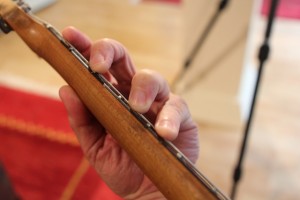
Next try the “Spock” variation, with the two-fret gap between the second and third fingers. Then the “pinky shredder,” with a two-fret gap between the third and fourth fingers. And finally, the “double gap,” with your first finger on the first fret, your second finger on the third fret, your third finger on the fourth fret, and your fourth finger on the sixth fret.
Remember, if this stretch is just too vast, start up higher on the neck where the frets are more closely spaced, and then work down to successively lower frets.
The single-string variations. Play each pattern on a single-string, but change position every four notes: For example, play 1, 2, 3, 4 on the lowest four frets, and then, without breaking tempo, repeat them on frets five through eight, then nine through twelve, and so on. See if you can make the notes before and after each jump sound as smooth as if they’d been played in position.
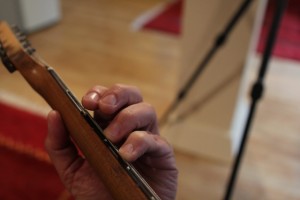
Hint: Think about shifting your free fingers to the new position before you’ve completed the pattern. For example, if you’re playing the 1, 2, 3, 4 pattern, your first finger can start moving toward a higher fret while you play the final note with your fourth finger, like so:
The string-jump variations. Play the patterns only on the sixth, fourth, and second strings, making sure that your transition from string to string is just a smooth-sounding as if you were moving to an adjacent string. Then try it on the first, third, and fifth strings.
The early-bird variations. Work through the 24 patterns, only transition from string to string on the fourth note of each rather than the first. For example, you’d play finger 1, 2, and 3 on the sixth string, then play the finger 4 note on the fifth string. Then try the transitioning on the third note of each pattern, then the second.
You should feel some burn, but not actual pain. Take frequent breaks, and if your fretting hands starts to seriously hurt, stop! Never, ever try to “play through” pain.


Leave a Reply